
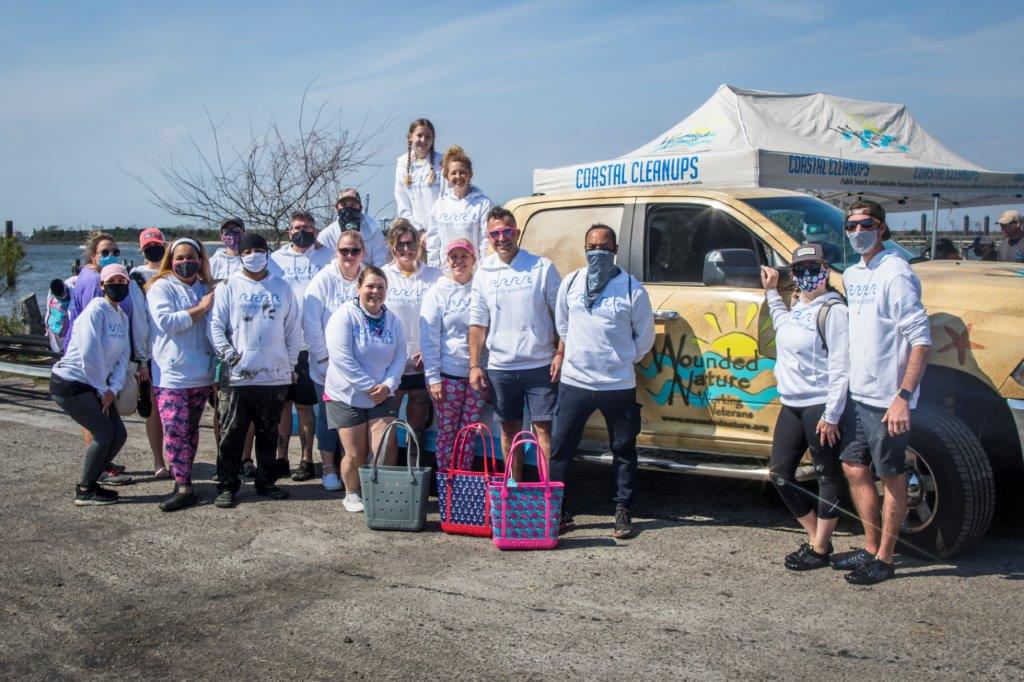
 Some people refer to our cleanups as “An Extreme Beach Cleanup”. We call it, making a real impact on saving wildlife and cleaning up the environment.
Volunteering for a Wounded Nature–Working Veterans beach clean-up event is different than participating in most other beach clean-ups. First, we expect you to bring your supplies. We do not want to contribute to the problem by introducing more plastics and single-use materials into the environment. When possible we will provide reusable burlap sacks for the cleanups.
Our cleanups take place regardless of weather with one exception, lightning. If the water is extremely rough, we will clean the areas we can get to on bad weather days. You will be on site for 1-4 hours, in an area without facilities.
If you are still interested and think you can work in this type of environment, this is what you need to bring:
- Personal water for drinking in a reusable container
- Snack
- Gloves
- Sunscreen
- Rain jacket
- Bacterial lotion
- Insect repellent (in many areas the gnats and mosquitoes will swarm if you are not wearing repellent).
- Toilet paper on remote beaches
- Shoes other than sandals and flip-flops
- A positive attitude
- Work ethic
- Camera
Actual cleanup
Each area will be covered by a team twice. When deposited by boat the team will do a sweep going to the end of their area of responsibility and sweep again as they return to the boat.
Each area based on terrain will require a different approach. If there is a large trash collection point, the team leader may want to place the entire team in that area.
Each piece of litter collected makes a difference, regardless of size.